Understanding semi-hermetic condensing units is essential for B2B buyers in the manufacturing and refrigeration sectors. These units are critical components in various refrigeration systems, designed to efficiently cool and condense refrigerants. Buyers often seek to understand their operational efficiency, application scenarios, and cost implications before making purchasing decisions. This article will provide a comprehensive overview of semi-hermetic condensing units, addressing key buyer concerns and offering practical insights to assist with informed decision-making.
Semi-hermetic condensing units offer several advantages that make them a popular choice for refrigeration applications. These units typically feature a compact design, which not only saves installation space but also enhances energy efficiency. Unlike open-type compressors, semi-hermetic units have a sealed structure that minimizes refrigerant leakage, ensuring optimal performance and environmental compliance. For more information on different types of condensing units, check out our Bitzer Condensing Unit.
The performance of semi-hermetic units can be further evaluated through specifications such as cooling capacity, energy consumption, and noise levels. Buyers should consider these factors as they directly impact operational costs and system reliability. For instance, a unit with a higher energy efficiency ratio (EER) will provide better long-term savings by reducing electricity usage.
Moreover, semi-hermetic condensing units are designed for versatility, making them suitable for various applications, from commercial refrigeration to industrial processes. This adaptability allows businesses to tailor their cooling solutions to specific operational needs, enhancing overall system performance. Additionally, exploring options like the YH Type Condenser can further optimize your cooling systems.
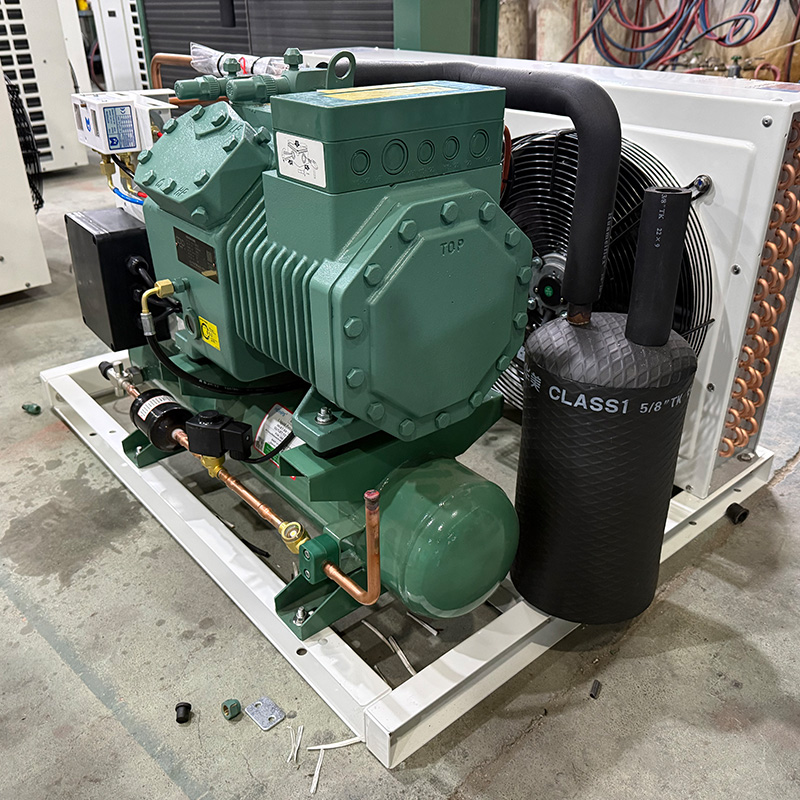
Semi-hermetic condensing units find application across a broad spectrum of industries, including food processing, pharmaceuticals, and cold storage facilities. In the food industry, these units are essential for maintaining the required temperatures during storage and transportation, ensuring product freshness and safety.
For pharmaceutical applications, precision temperature control is critical. Semi-hermetic units can maintain stable operating conditions, which is vital for preserving sensitive medications and vaccines. The ability to customize these units to meet specific temperature requirements further enhances their suitability for such applications.
Additionally, in industrial settings, semi-hermetic condensing units can be integrated into larger refrigeration systems, providing reliable cooling for manufacturing processes or large-scale cold storage. Their robust construction and efficient design make them an ideal choice for operations requiring continuous and stable performance under demanding conditions.
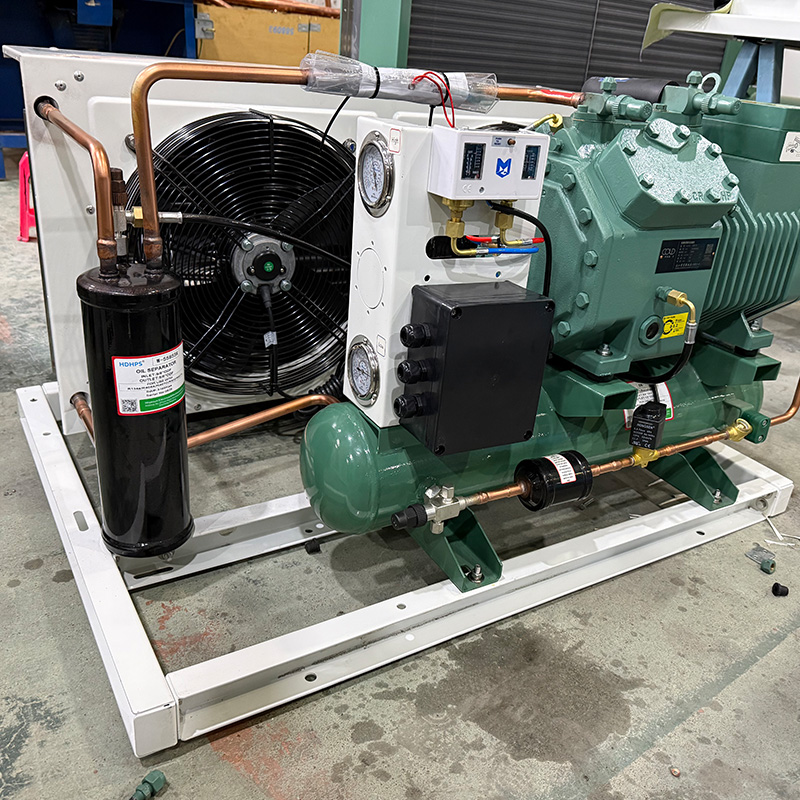
When considering the purchase of semi-hermetic condensing units, several cost factors should be evaluated beyond the initial purchase price. These include installation costs, operational expenses, and long-term maintenance requirements.
Installation costs can vary significantly based on the complexity of the refrigeration system and the specific site conditions. Buyers should factor in any necessary modifications to existing infrastructure, which can add to overall expenses.
Operational costs are primarily determined by energy consumption, which is influenced by the efficiency of the unit. Units with higher EER ratings may have a higher upfront cost but often result in lower energy bills over time. Buyers should conduct a lifecycle cost analysis to assess the total cost of ownership.
Maintenance is another critical cost consideration. Semi-hermetic units are generally easier to maintain than open-type systems due to their sealed design, which reduces the likelihood of refrigerant leaks and contamination. However, routine maintenance checks and potential repairs should still be budgeted, as they are essential for ensuring long-term reliability and performance.
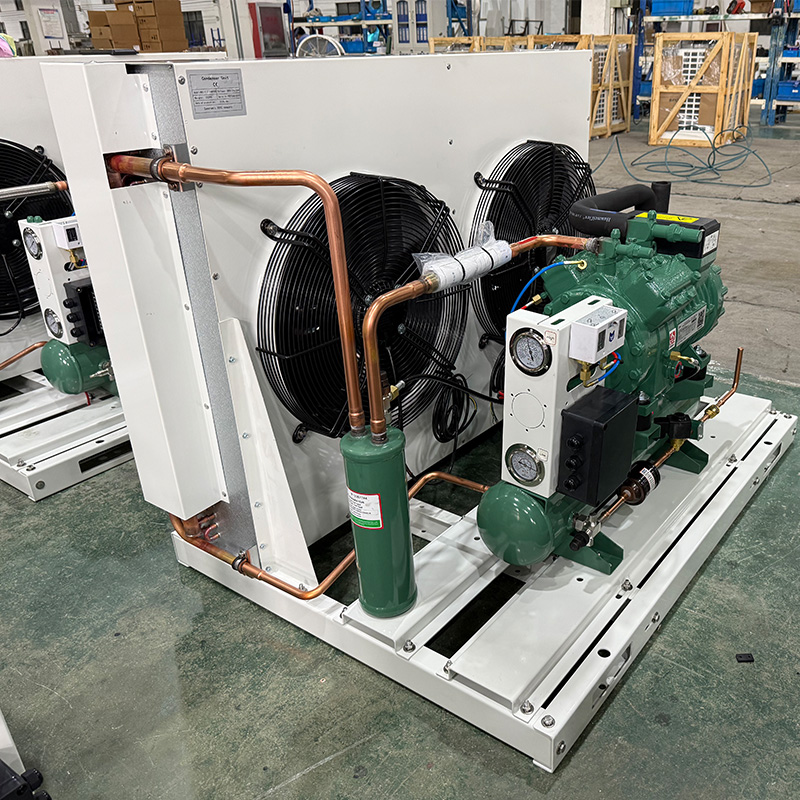
Identifying reliable suppliers for semi-hermetic condensing units is crucial for ensuring product quality and performance. Buyers should seek manufacturers with a proven track record in the refrigeration industry. Factors to consider when evaluating suppliers include their manufacturing capabilities, product certifications, and customer service reputation.
Look for manufacturers that offer transparency regarding their production processes and quality control measures. A company with a strong R&D background, such as Shanghai EMTH, can provide insights into product innovations and improvements. Additionally, consider suppliers that can accommodate customization requests, allowing for tailored solutions that meet specific operational requirements.
Engaging with existing customers and reviewing case studies can also provide valuable insights into the supplier's reliability and product performance. Trustworthy suppliers will often be willing to share references and detailed product information to support their claims.
With a strong name in the industry, and over 3,000+ clients served, EMTH EMTH is a trustworthy and reliable supplier who has been recognized by other customers.
Complete service system, from the creation of plans, Ice maker for commercial production and project landing, to after-sales services, there's special docking.
A modern plant of over 4000 square meters is in operation to meet the majority Refrigeration condenser production requirements.
We have more than 20 years of experience and a highly skilled R&D EMTH staff.

Welcome to EMTH, a cold storage refrigeration equipment specialist in China! We offer innovative and effective cold storage solutions, including cold storage, evaporator, condensing unit and ice machine.
Room 304-305B, Building 5, BESHINE B.P, No. 559Zhuyuan Road, Minhang District 201112, Shanghai, China
Copyright © Shanghai EMTH Import & Export Co., Ltd. All Rights Reserved. - Privacy Policy
 EN
 AR
 BG
 HR
 CS
 DA
 NL
 FI
 FR
 DE
 EL
 IT
 JA
 KO
 NO
 PL
 PT
 RO
 RU
 ES
 TL
 IW
 ID
 LT
 SR
 VI
 HU
 TH
 MS
 AZ
 JW
 LO
 MN
 SO
 MY
 KK
 TG
 UZ
 GD
 XH